
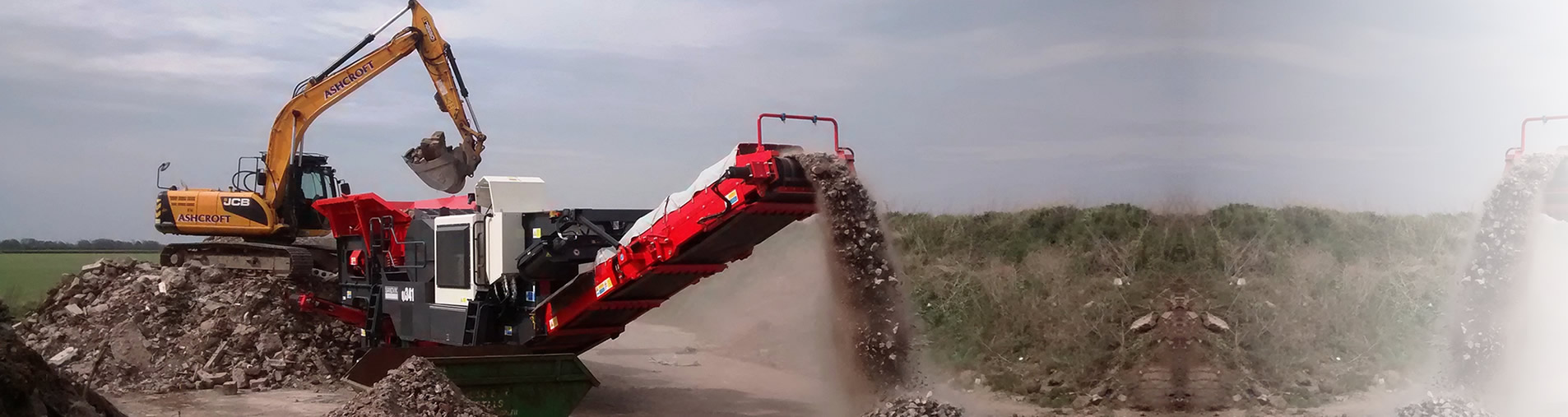
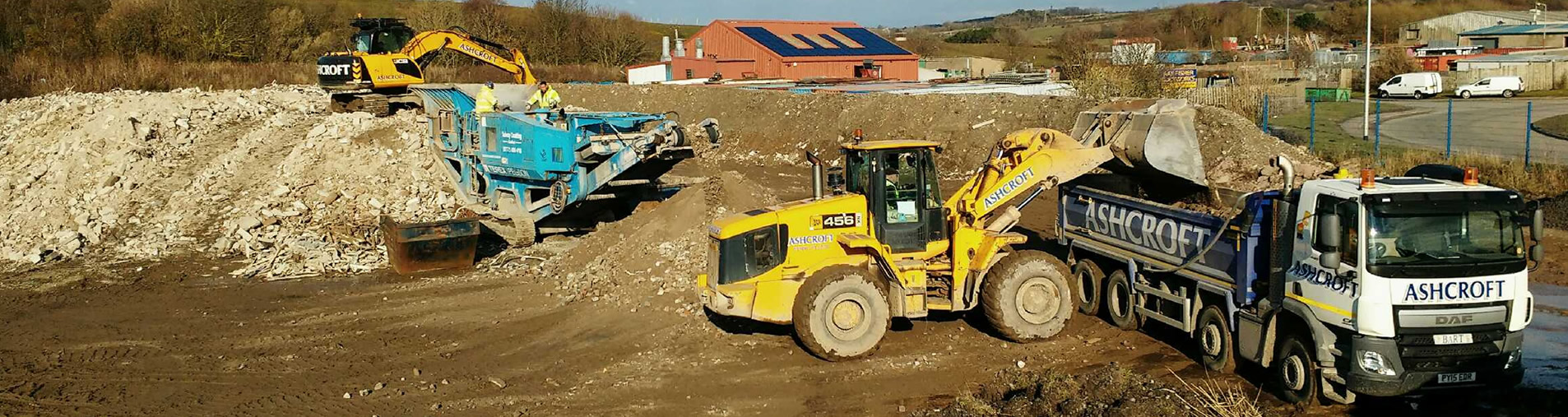
Most of what comes out of a demolition job or a groundworks dig is not really waste. Clean concrete, brick, block, stone and hardcore can be crushed, screened and sent back out as aggregate for the next job. Ashcroft does exactly that at our registered waste disposal, recycling and land reclamation centre just outside Maryport, and on larger sites we bring the crushing plant to the material instead.
It keeps material out of landfill, it costs less than tipping, and it gives contractors a local source of sub-base and bedding that has not had to come out of a quarry.
1. Separate it on site. Recycling starts before anything is loaded. Inert material needs keeping apart from timber, metal, plastics, plasterboard and general waste, because a mixed skip costs more to deal with and recycles less. Our own demolition work follows the same rule: soft strip first, then steel, masonry, plastics and wood are collected and sorted separately.
2. Haul it. Our 20 tonne tipper wagons collect from local sites and bring material back to the centre. The wagons have in-cab weighing, so loads are weighed as they are lifted.
3. Crush and screen. Material goes through our crushing and screening equipment and is graded into stock products.
4. Send it back out. Recycled aggregate goes back to site in anything from a few tonnes to over 100,000 tonnes.
5. Put the rest to use. Clean inert spoil that is not suited to aggregate is used as capping across a redundant colliery site, turning it back into productive land that will eventually grow bio-willow for a local biomass plant.
Grading certification is available. Tell us the specification you are working to and we will confirm whether stock material meets it. There is more about the yard itself on our waste disposal and recycling page.
Where a site has enough hardcore, it is often cheaper to crush it where it lies than to haul it away and buy stone back in. The crushed material can go straight back down as a piling mat, haul road, working platform or sub-base. We can bring our crushing system to site along with the loading plant and tipper wagons to go with it.
On-site crushing needs the right paperwork in place before the crusher arrives. Mobile crushers operate under a local authority permit, and crushing waste on site also needs either a registered waste exemption or an environmental permit, depending on the quantities involved and how the material will be used. Dust and noise need managing too, especially near houses. Talk to us early in the programme and none of this needs to hold the job up.
Anyone who produces or handles waste has a legal duty of care under the Environmental Protection Act 1990, and that responsibility does not end when the wagon leaves your gate. In practice it means:
The rules are tightening. Digital waste tracking is being rolled out, starting with permitted waste receiving sites in England from October 2026, and waste carriers are due to move from simple registration to a permit regime, expected during 2027. If you move waste yourself, check the current Environment Agency guidance.
Landfill is expensive. From 1 April 2026, landfill tax in England is £130.75 a tonne at the standard rate and £8.65 a tonne for qualifying inert material, before gate fees and haulage are added. Recycling inert waste avoids most of that, and recycled aggregate is usually cheaper than quarried stone brought in from further away. Many clients and planning conditions now ask how much waste was kept out of landfill, and weighed loads make that easy to report. On one housing demolition contract, our client estimated that more than 95% of the waste was recycled; you can read their comments on our testimonials page.
Clean concrete, brick, block, stone, tiles and general hardcore all crush well. Plaster, timber, plastics, soil and rubbish mixed through a load lower the quality of the end product, so the cleaner it arrives the better. If you are unsure about a load, ask before it is tipped.
When it is produced and graded to the specification, recycled sub-base is accepted on a wide range of work. Always check your designer's or client's specification, and ask for the grading certificate for the material you are supplied.
No. Hazardous waste has to be identified, kept separate and taken to a facility permitted to accept it. On our own demolition jobs, asbestos is dealt with before the main demolition starts so it never ends up in the crusher.
Yes. Every transfer of waste needs a transfer note, even a single wagon. For regular loads of the same waste between the same parties, a season ticket covering up to a year can be used instead.
Use our contact page, which lists who to speak to about tipping, stone and crushing. Let us know the material, the rough tonnage and where the site is.
Ashcroft Plant (Cumbria) Ltd is a CHAS member and an approved Constructionline supplier (number 103246).