
Published: 13 October 2026
Most people assume knocking a building down is simpler, legally, than putting one up. Sometimes it is. But demolition in England has its own set of rules, and getting them wrong can mean enforcement action, a fine or, for a listed building, a criminal offence.
The short answer is that most demolition does not need full planning permission, but much of it does need the council's prior approval, and some of it needs full consent. Separately, building control needs notice before work starts. Here is how it fits together for sites in Cumbria. This is a general guide to the rules in England rather than legal advice, so always confirm the position with your local planning authority.
Under the Town and Country Planning Act 1990, demolishing a building is "development", which in principle needs planning permission. In practice, most demolition is covered by permitted development rights in Part 11, Class B of the Town and Country Planning (General Permitted Development) (England) Order 2015. Those rights come with conditions, the main one being prior approval.
A few things are not treated as development at all. Under the government's 2021 demolition direction, a building with an external volume of 50 cubic metres or less, such as a garden shed or a small garage, can be taken down without planning permission, and so can a gate, fence or wall. The exceptions are gates, fences and walls in a conservation area, and statues, memorials and monuments. Listed building consent still applies to anything that is listed.
For most buildings, before you demolish you must apply to the local planning authority for a decision on whether its prior approval is needed for two things: the method of demolition and any proposed restoration of the site. The application includes a written description of the works, a statement that a site notice has been put up, and the fee.
Prior approval is not needed where demolition is urgently necessary for health or safety reasons, although you must then give the council a written justification as soon as reasonably practicable. Nor is it needed where the demolition is already covered by another consent, most commonly a full planning permission to redevelop the site, or listed building consent.
Permitted development rights do not apply, and a planning application is needed, where:
Demolishing all or part of a listed building needs listed building consent, and doing the work without it is a criminal offence. Structures within the grounds of a listed building can be protected too. Cumbria has a great many listed buildings, from farmhouses and bank barns to chapels and mill buildings, so check the National Heritage List for England before assuming a building is clear. Scheduled monuments need scheduled monument consent, which is applied for through Historic England.
Since 1 April 2023 Cumbria has had two unitary councils. Cumberland Council covers the former Allerdale, Copeland and Carlisle areas, including Maryport, Workington, Whitehaven, Cockermouth and Carlisle. Westmorland and Furness Council covers the former Barrow, Eden and South Lakeland areas. Inside the Lake District National Park, the planning authority is the Lake District National Park Authority, and part of the Yorkshire Dales National Park also lies within Cumbria. Building control is still dealt with by Cumberland or Westmorland and Furness Council, including inside the national parks. Over the border in Dumfries and Galloway the Scottish system is different again, including the need for a building warrant to demolish.
Planning is only half of it. Under section 80 of the Building Act 1984, anyone intending to demolish a building must give notice to the local authority, and send copies to the occupiers of adjacent buildings and to the gas and electricity suppliers. Work cannot start until the council has issued a counter-notice under section 81 or six weeks have passed.
The counter-notice sets conditions for the job. These commonly include shoring up and weatherproofing neighbouring buildings, making good any damage, sealing off drains and sewers, arranging disconnection of services, clearing the site and protecting the public. Demolishing without giving notice can lead to a fine at level 4 on the standard scale, currently up to £2,500.
Some demolitions are exempt: a building of 1,750 cubic feet or less (about 50 cubic metres) measured externally, internal demolition in a building that will stay occupied, and most agricultural buildings, unless they adjoin non-agricultural ones.
On a straightforward job, allow at least two months from first enquiry to the machines arriving, and longer if bats, listed status or a full planning application are involved.
Securing permits is the first stage of our own seven-stage demolition process, and we are happy to help clients work out what their site needs. If you are also working out a budget, see our guide to demolition costs in Cumbria. For a site visit or a quote, contact the team.
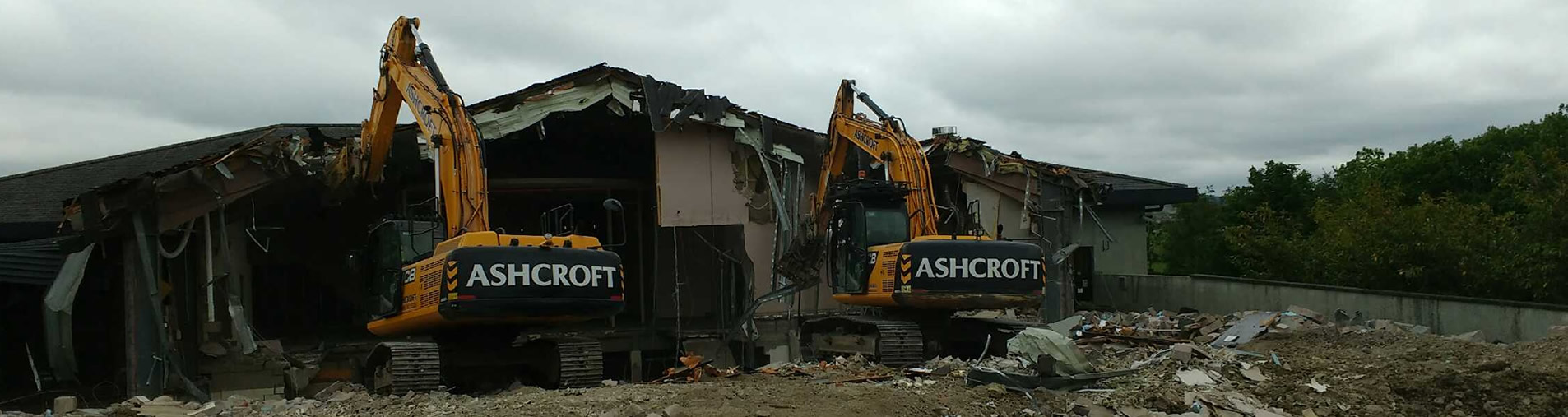
Securing permits is the first stage of our seven-stage demolition process.
Asbestos, access, services, waste and salvage: what drives the price of a demolition job.